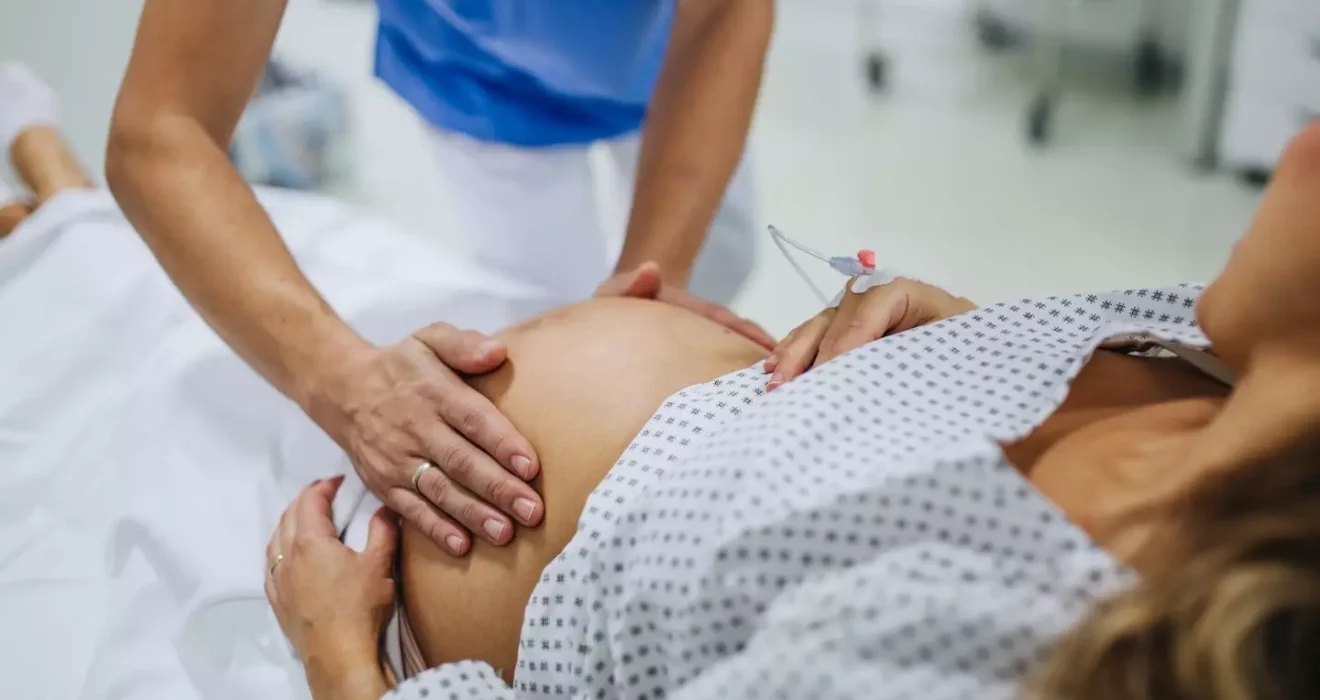
How should I give birth?
I have looked after so many women in pregnancy and in labour and at caesarean section (C/S). It is such an important discussion to have. I make a disclaimer up front, that I think a safe vaginal birth is first prize for every baby and every mother. I say this because any operation should be avoided unless it is necessary and, although C/S have become very safe over the years, a C/S is still a major surgical procedure.
How would you know? Does someone know better? Who do you trust? And that’s what it’s about. Trust.
Mothersaid can be that source of information and advice that you can trust.
I was once consulted by a patient for the first time 4 weeks before her due date because she wanted a second opinion on how she should give birth. My first thought was ‘how sad’ that she did not trust her health care provider (HCP) at this late stage of her pregnancy. I counselled her to return to her HCP, if she felt comfortable, to have a frank discussion about her thoughts and fears. I almost didn’t give her my opinion as I felt it would be unhelpful at this late stage.
And then there are those patients who ’shop around’ until they hear what they want to hear even if it is the opposite advice to that which has been given by 6 other HCPs before.
Vaginal Birth or C/S?
I have had lots of patients arrive for their first pregnancy visit requesting a C/S. I always ask why. The usual response is to avoid the pain of vaginal birth or to ensure the timing of the birth is predictable.
- I have managed many labours using an epidural for pain management, and I recall one couple playing backgammon during the peak of a contraction towards the end of labour! So, pain can be managed. Not to mention the pain of a major abdominal operation with immediate need post-operatively to care for a newborn!
- A planned induction of labour at a safe stage in the pregnancy with suitable obstetric requirements in place, can easily be an option if timing is important. But I use this opportunity to point out that parenting is all about no longer being fully in control and the uncertainty and unpredictability of time and type of birth are just a foretaste of what is to follow! I would add that nobody believes me in their first pregnancy!
Vaginal birth after C/S?

The statistics state approximately 1 in 200 C/S scars may rupture during labour causing foetal distress, foetal death, maternal hysterectomy, and even maternal death. So, it is something that needs to be thought through and discussed.
How to make that statistic specific to you depends on so many factors, not least of which is why you had the first C/S (and what type of scar you have because a classical C/S with an ‘up and down’ scar in the uterus means you will always need a repeat C/S).
- If the C/S was for a breech baby and this pregnancy is not breech, then a vaginal birth should be a strong possibility.
- If the C/S was for a big baby which ‘got stuck’ then a subsequent pregnancy is likely on average to be approximately 200g bigger and the chances are that your labour would end with an emergency C/S and may be better advised to opt for a safer elective C/S.
- If the C/S was for a maternal condition like eclampsia or placenta praevia and these are not present in the current pregnancy, then a vaginal birth should be possible.
- If you have had 2 previous C/S, then the advice should be a repeat C/S.
Its all about safety. Safety for baby first and then safety for mum to be.
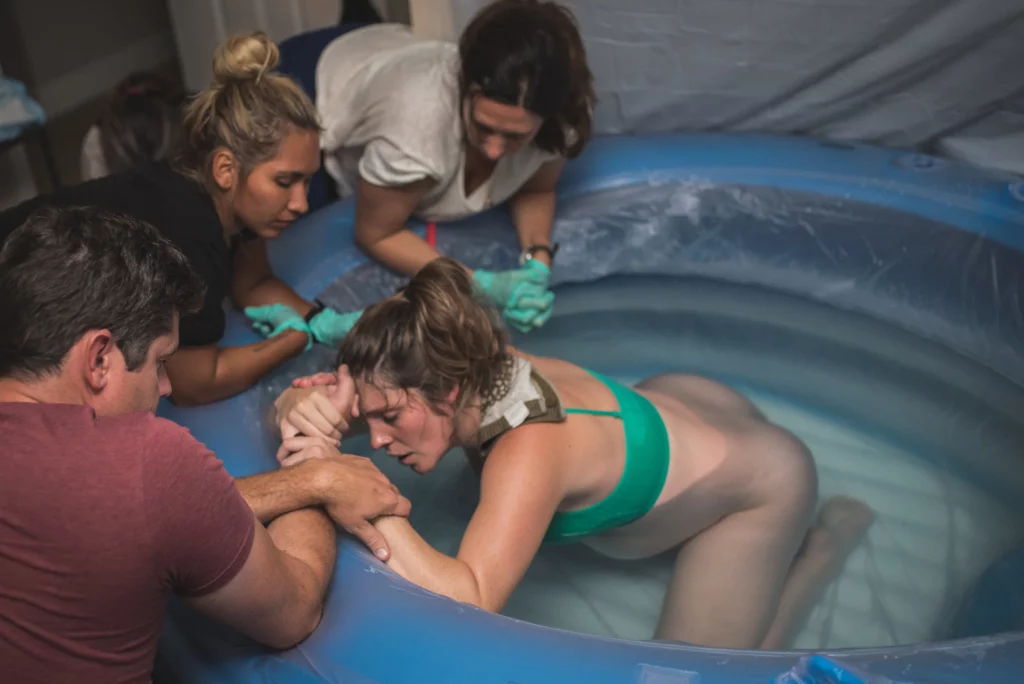
Water birth or dry land? Squatting or lying down?
I am old school. I have pondered these questions in depth over the years. If you take a woman in a rural community who has never read a blog post when she is in labour:
- she will naturally seek water (a river) for the purpose of pain relief. The feeling of weightlessness relieves a lot of pain. She will, however, naturally pull herself out of the river and on to dry land to give birth.
- She will squat – not to allow the help of gravity (a uterine contraction has way more power than the pull of gravity on a 3.5kg baby) – but to bring her diaphragm muscle below her rib cage into the pushing effort and further strengthen the ‘force’ of the contraction. Squatting ‘opens’ the outlet of the pelvis by at least a centimetre if not more and, most importantly, squatting will also allow her to see and to be able to deliver her own baby and hold it up when it is born.
- There are no rules, but it is not about recreating a water environment similar to the womb because the ultimate transition into air is what triggers the most amazing anatomical and physiological changes in the baby’s heart and lungs to allow them to breathe air for the first time.
Every person, every pregnancy is different. Strong trustworthy advice is vital for a safe, fulfilling birth experience.
Let us know your thoughts or questions below. We would love to hear from you and your experiences. This blog post was written by one of our medical advisory members, Dr Sheana Jones.